
Florida's Missile Coast Takes Aim at the Space Age
September 21, 1960 — A Mace guided missile rises from Florida's missile test range.
By Wm. E. McMullen II
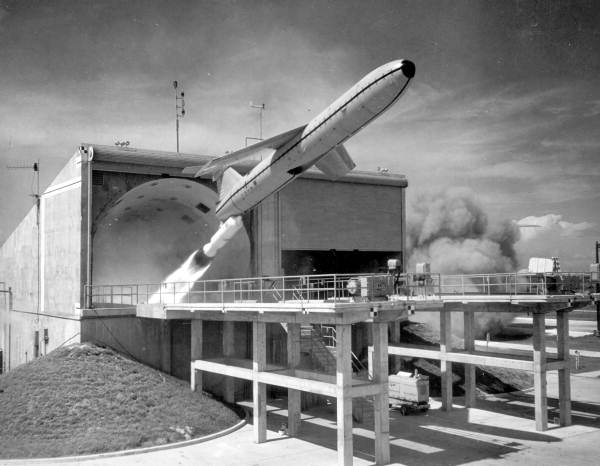
On September 21, 1960, a Mace guided missile rose from Florida's missile test range, capturing a moment when the state's Atlantic coast was rapidly becoming one of the most important testing grounds of the Space Age.
Florida Memory dates the photograph precisely to September 21, 1960 and identifies the site with the U.S. Air Force Missile Test Center and Patrick Air Force Base. The archival description gives the Mace a range of about 1,200 miles.
A Large Machine on a Narrow Coast
The archive gives the missile's dimensions as approximately 44 feet long, 54 inches in diameter and 22 feet across the wings. Those numbers help convey the scale of the technology being tested along Florida's coast.
Why Florida?
Florida's Atlantic shoreline allowed launches to be directed eastward over the ocean rather than over heavily populated land. Its relatively low latitude also became valuable for orbital launches because Earth's rotation provides an eastward velocity advantage.
From Missiles to Mercury
Tracking stations, launch infrastructure, communications systems and technical expertise accumulated along the coast. Less than eight months after this photograph, Alan Shepard launched from Cape Canaveral on May 5, 1961, becoming the first American in space.
The photograph records more than a missile test. It catches Florida during the transition that would make Cape Canaveral and the surrounding communities synonymous with American spaceflight.
Sources for Additional Reading
Explore the daily archive: Discover more events that shaped Florida's communities, culture and history.
Today in Florida History