How Forts Protected Pioneer Families
Five Hundred Families, One Terrible January
In January 1836 alone, roughly five hundred pioneer families fled their homes across East Florida, arriving in what one contemporary account described as a situation “bordering upon starvation,” seeking refuge in St. Augustine and other fortified places. That single month shows what forts meant to ordinary families once the Second Seminole War began: not distant military installations, but shelter when violence reached their communities.
This article turns to the civilian side of Florida's fort network — the families who depended on forts for physical safety, and the larger historical context surrounding why that protection became necessary.
A Fortified Plantation, and Who Actually Sheltered There
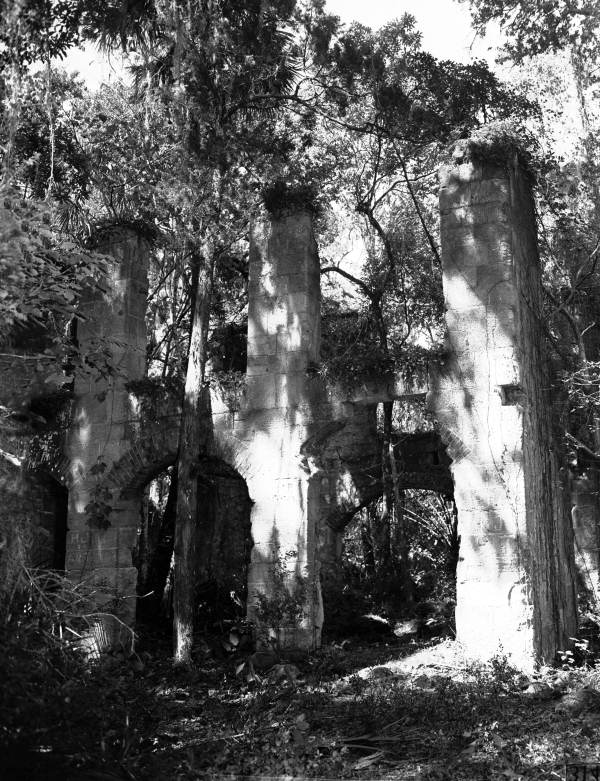
Bulow Plantation, near present-day Bunnell, offers one of the best-documented examples. On December 28, 1835, Major Benjamin Putnam occupied the plantation with soldiers and fortified it using cotton bales and a hastily built stockade. Local planters took refuge there together with the enslaved people who worked their land. That distinction matters: enslaved men, women, and children did not have the same freedom to choose whether to seek shelter as the free families around them.
Putnam's force abandoned the site on January 23, 1836, and Seminole forces burned the plantation and mill shortly afterward. By February, Seminole and Black Seminole forces had struck twenty-one plantations along the same river corridor. These attacks were part of organized resistance to removal policies and treaties many Seminole leaders had rejected.
Families Who Built Their Own Protection
Not every family waited for the Army to fortify a nearby site. Some built their own defenses. In October 1851, Redding Blount led a group of white pioneers and enslaved people west of present-day Bartow and established a blockhouse for protection. The settlement became known as Fort Blount and was later renamed Bartow.
This pattern appeared elsewhere. Orlando grew near Fort Gatlin, Sanford around Fort Mellon, and Tampa around Fort Brooke. Military posts could become the nucleus of civilian communities because a defended position offered something scarce on the frontier: relative safety.
A Danger That Ran in Both Directions
A complete account must include the broader context. Pioneer families experienced genuine fear, displacement, and loss, while Seminole people faced military removal, unequal legal treatment, and armed pressure from territorial authorities. The conflict was not a simple story of settlers under attack; it was part of a larger struggle over land, removal, sovereignty, and survival.
Why This Mattered for Florida
Forts protected pioneer families in a literal sense — providing shelter and a place to gather during periods of violence and displacement. At the same time, the need for those forts existed within a larger and more difficult history of conflict. Understanding both parts of that story gives a fuller picture of how Florida's frontier communities developed.
Did You Know?
- About 500 pioneer families were displaced in January 1836 alone.
- Bulow Plantation was fortified by Major Benjamin Putnam in December 1835.
- Orlando, Sanford, and Tampa all developed near important military forts.
Vocabulary
- Refuge — a safe place offering shelter or protection from danger.
- Nucleus — a central point around which something else forms, such as a town growing around a fort.
- Bounty — a financial reward offered for a specified action.
Discussion Questions
- Why is it important to distinguish between free families who chose to seek shelter and enslaved people who did not have the same freedom?
- Why did military forts often become the starting point for permanent civilian communities?
Quick Facts
| Families displaced, January 1836 | About 500 |
|---|---|
| Bulow Plantation fortified | December 28, 1835 |
| Plantations attacked by February 1836 | 21 along the river corridor |
| Fort Blount founded | October 1851 |
| Fort Blount later renamed | Bartow, 1867 |
Related Articles on Florida Learning Hub
Sources & Further Reading
- Florida Historical Society. “Seminole Wars.”
- Florida Memory, State Archives of Florida. “View of Bulow Plantation Ruins Historic State Park,” Image FPS00166.
- Additional historical references cited in the FLH source file for this Mini Article.