The Stono Rebellion and the Road to Freedom in Spanish Florida
September 9, 1739 — Early on a Sunday morning near the Stono River in South Carolina, about twenty enslaved Black men gathered, seized weapons and began one of the largest uprisings of enslaved people in Britain's mainland North American colonies before the American Revolution.
The uprising began in South Carolina. But its destination makes the story an essential part of Florida history.
They headed south toward Spanish St. Augustine.
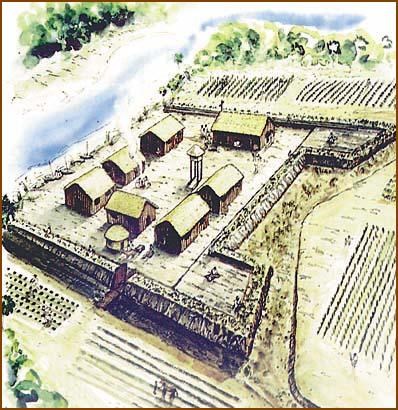
Florida was not simply a direction on a map. Spanish authorities had created a policy under which some people escaping slavery in the British colonies could obtain freedom in Spanish Florida by accepting Catholicism and serving the Spanish Crown. By 1739, that promise had taken physical form just north of St. Augustine at Gracia Real de Santa Teresa de Mose—Fort Mose, the first legally sanctioned free Black community within the present-day United States.
A Border Between Two Different Colonial Worlds
In the eighteenth century, the southeastern coast of North America was divided between competing European empires. British Carolina lay to the north. Spanish Florida centered on St. Augustine lay to the south.
The border was politically unstable and frequently violent. But for enslaved people in the British colonies, the Spanish territory also represented something else: a possible route out of bondage.
The National Park Service records that the first documented freedom seekers from Carolina reached St. Augustine in 1687. Spanish officials refused an English demand that they be returned. In 1693, King Charles II of Spain formalized a policy offering liberty to people escaping British slavery who accepted Catholicism, with later decrees refining the requirements for service to the Crown.
News of Spanish Florida's policy traveled north through Black communities.
For people held in slavery in Carolina, St. Augustine became a known destination.
Fort Mose Makes the Promise Real
By the 1730s, enough freedom seekers had reached Spanish Florida that Governor Manuel de Montiano established a separate settlement approximately two miles north of St. Augustine.
In 1738, the residents received land for a fortified community called Gracia Real de Santa Teresa de Mose, commonly known today as Fort Mose.
The settlement included families as well as soldiers. The National Park Service estimates its population at roughly one hundred people. Its men formed a Black militia that helped defend the northern approaches to St. Augustine.
The community's leader was Francisco Menéndez, himself a formerly enslaved African who became captain of the Black militia.
Fort Mose therefore represented something extraordinary in colonial North America: a legally recognized community where formerly enslaved Black people owned their freedom, maintained families and served as defenders of Spanish Florida.
September 9, 1739
Against this background, the events near the Stono River began.
According to the Library of Congress, approximately twenty Black Carolinians gathered near the river about twenty miles southwest of Charleston. They seized guns and ammunition from a store and began moving south.
As they marched, their numbers grew. Contemporary and later accounts describe the group carrying a banner, beating drums and calling for liberty.
Their intended destination was Spanish St. Augustine.
The Library of Congress identifies the Stono Rebellion as the largest uprising of enslaved people in Britain's mainland colonies before the American Revolution. Estimates of the group later that day range from roughly sixty to one hundred participants.
Why Florida Mattered
The Florida connection changes how the event should be understood.
The rebels were not merely fleeing randomly southward. Spanish Florida had deliberately become a geopolitical rival to Britain's slaveholding colonies. Spain could weaken its British enemy while gaining settlers and militia members by providing a conditional sanctuary to freedom seekers.
For enslaved people, imperial rivalry created an opening.
Fort Mose demonstrated that escape to Florida could lead to a radically different legal status.
That did not mean Spanish Florida was a society without slavery. Enslaved people lived and worked there as well. Nor was the Spanish offer of freedom unconditional. Conversion, loyalty and military or Crown service were important parts of the policy.
But compared with the racial slave system developing in British Carolina, the existence of a legally recognized free Black settlement at St. Augustine was enormously significant.
The Rebellion Is Suppressed
The march did not reach St. Augustine.
Later on September 9, armed white colonists caught the rebels. A violent confrontation followed. The Library of Congress reports that more than twenty white colonists and nearly twice as many Black participants were killed before the uprising was suppressed. Some participants escaped; others were captured and executed or returned to slavery.
The consequences were severe. South Carolina tightened its slave laws and increased restrictions intended to prevent future uprisings.
Yet the rebellion also demonstrated something British authorities already feared: enslaved people knew that Spanish Florida offered a possible alternative.
A Frontier of Freedom and War
Fort Mose's position north of St. Augustine made it both a community and a military outpost.
Only months after the Stono Rebellion, the imperial conflict intensified. In 1740, Georgia founder James Oglethorpe led British forces against St. Augustine. Fort Mose was captured and occupied by British troops.
Spanish troops, Native allies and the Black militia led by Francisco Menéndez later attacked and retook the fort in a fierce battle. The settlement was destroyed during the fighting and eventually rebuilt in 1752.
When Spain transferred Florida to Britain in 1763, the Fort Mose community evacuated with other Spanish residents, many resettling in Cuba rather than live under British rule.
Florida's Place in a Larger American Story
The Stono Rebellion is usually taught as South Carolina history, and geographically that is correct.
But stopping the story at the South Carolina border leaves out one of its most important facts.
The people marching south knew where they wanted to go.
They were heading toward a Spanish Florida where earlier freedom seekers had established lives, where a free Black militia defended St. Augustine, and where Fort Mose stood as physical evidence that another future might be possible.
That makes September 9, 1739 part of Florida history—not because the rebellion began here, but because Florida was the destination.
September 9 in Florida History
The road from the Stono River to St. Augustine was approximately 250 miles. The rebels never completed it.
But their intended journey reveals the importance of Spanish Florida in the history of slavery, resistance and freedom in colonial North America.
Long before the Underground Railroad of the nineteenth century, people escaping slavery in Britain's southern colonies were already looking south.
And at the end of that road stood St. Augustine and Fort Mose.
Sources for Additional Reading
- Library of Congress — The Stono Rebellion — September 9 chronology and description of the rebels' intended march toward Spanish St. Augustine.
- National Park Service — Fort Mose — History of the free Black settlement north of St. Augustine.
- National Park Service — African Americans in St. Augustine, 1565–1821 — Spanish asylum policy, early freedom seekers and the establishment of Fort Mose.
Also September 9: Hurricane Dora Sends the Beatles to Key West